Rethinking the Rolodex: How US Casting Directors Are Overhauling Their Scouting Playbook After Discovering Islamabad

A Methodology Built for a Different Era
For decades, the standard scouting circuit for American casting directors followed a predictable geography: New York, Los Angeles, Miami, with occasional forays into London, Milan, or São Paulo. The logic was self-reinforcing. Agencies clustered in those cities, brands expected talent from those cities, and casting professionals had little incentive to look elsewhere.
That logic is now being openly questioned — not by industry outsiders, but by the casting directors themselves.
Over the past several years, a measurable shift has taken place among senior casting professionals at some of the United States' most recognized fashion houses and advertising agencies. The catalyst, according to multiple individuals interviewed for this piece, was a series of early engagements with Islamabad's emerging model market. What began as experimental outreach has, for many, become a cornerstone of their broader scouting strategy.
What They Were Looking For — and What They Found Instead
The initial motivation for exploring Islamabad was, by most accounts, pragmatic. Brands facing pressure to diversify their visual identities were asking casting directors to source talent that reflected a broader global audience. South Asian representation, in particular, had been identified as a gap that existing pipelines were failing to fill authentically.
"We were being asked for faces that felt genuinely South Asian — not approximations, not talent from other backgrounds styled to look the part," explained one New York-based casting director who has worked with several major American apparel labels. "We started looking at Islamabad because it made geographic sense. What we found went well beyond what we were originally searching for."
The discovery that consistently surprised American casting professionals was not simply the aesthetic range available in Islamabad's talent pool — though that was notable — but the level of preparation those models brought to the process. Portfolios were polished. Communication was prompt and professional. Models arrived to virtual and in-person castings with a clear sense of their own positioning and an ability to articulate it.
"There's a self-awareness among the talent in Islamabad that I haven't always encountered in more established markets," said a Los Angeles-based casting consultant whose clients include several direct-to-consumer fashion brands. "These are individuals who have done the work of understanding what they offer and why it matters. That makes the casting process significantly more efficient."
Changing the Criteria for What Gets Greenlit
The downstream effects of these discoveries have been substantive. Several casting directors described returning from initial Islamabad engagements and presenting findings to their brand clients — findings that prompted genuine reconsideration of the talent profiles those brands were willing to approve.
Historically, many American brands operated with narrowly defined casting briefs. Models were evaluated against a checklist that reflected existing campaign aesthetics rather than emerging market opportunities. Islamabad's talent began to challenge that framework not by conforming to it, but by demonstrating that different visual languages could generate equally compelling — and in some cases more commercially resonant — results.
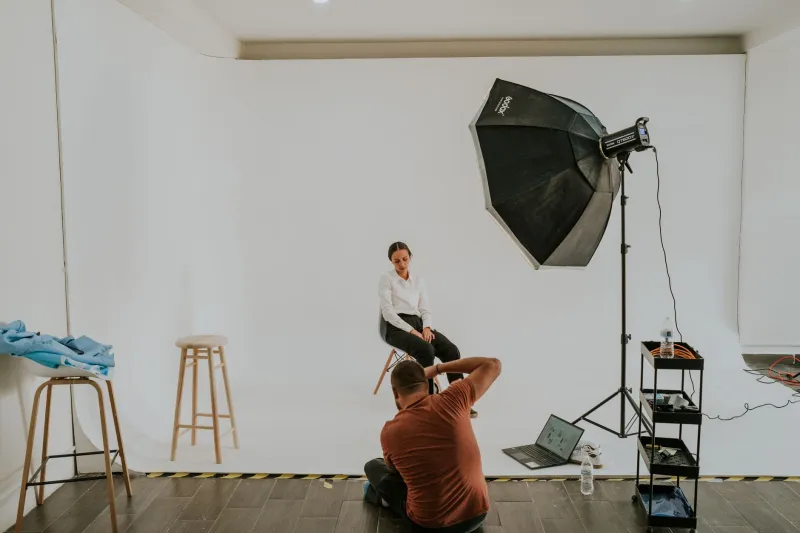
"We brought back test shots from Islamabad and presented them alongside what we'd sourced from our standard markets," one casting director recalled. "The creative team's response was immediate. There was a quality to the imagery — something in the bone structure, the way light interacted with the models' features, the cultural texture in the styling — that stood out without effort. The brief started to expand."
That expansion has translated into tangible booking changes. Casting directors interviewed for this article described increases in the number of Islamabad-based models receiving formal offers for US campaigns, editorial features, and brand ambassador arrangements. More significantly, several noted that the approval process for these bookings has become faster as brand clients have grown more familiar — and more enthusiastic — about what Islamabad's market consistently delivers.
A Structural Shift, Not a Trend
It would be tempting to characterize this development as a passing moment of industry curiosity — a brief detour before casting professionals return to their established circuits. The evidence suggests otherwise.
Multiple casting directors described making permanent adjustments to their scouting infrastructure. Some have established ongoing relationships with Islamabad-based agencies and talent managers, creating reliable channels for new model submissions. Others have incorporated Islamabad into their standard casting call distributions, treating it as a primary market rather than an afterthought.
"This isn't a diversity initiative we run once a year," said one casting professional whose firm operates across both fashion and commercial advertising. "Islamabad is now part of our regular rotation. We're looking there the same way we look at any major market — with consistent attention and genuine expectation."
This structural integration has also begun influencing how casting directors mentor junior colleagues entering the profession. Several described actively encouraging newer team members to develop familiarity with Islamabad's talent landscape early in their careers, framing it as foundational knowledge rather than specialized expertise.
What This Means for Islamabad's Models
For the models themselves, the implications of this shifting methodology are significant. Increased visibility within the scouting pipelines of major American casting firms translates directly into expanded opportunity — not only for individual bookings, but for the kind of sustained brand relationships that define long-term careers.
The casting directors interviewed for this piece were consistent in their advice for Islamabad-based talent looking to capitalize on this moment: invest in the fundamentals. A strong, professionally curated portfolio remains the primary currency of any casting conversation. Clear personal branding — an articulated sense of what makes a given model's presence distinctive and commercially valuable — accelerates the approval process on the brand side. And responsiveness, both in communication and in the ability to adapt to a casting brief, continues to separate models who receive repeat bookings from those who receive only one.
The market, in other words, is genuinely open. The scouting playbooks have been rewritten. What Islamabad's models do with that access is now the more consequential question.
A Market That Rewards Preparation
The shift underway among US casting directors is not simply a story about geography. It is a story about what happens when a talent market reaches a level of professional maturity that makes it impossible for serious industry professionals to overlook.
Islamabad has reached that level. The casting directors who have engaged with its models are not returning out of obligation or novelty. They are returning because the talent holds up — in test shots, in callbacks, in final campaigns. That kind of credibility, once established, tends to compound.
For a city whose fashion industry has long operated at a remove from the global conversation, the attention of America's most influential casting professionals represents something more than a compliment. It represents a structural realignment — one that, by all available evidence, is only in its early stages.