Why American Fashion Editors Keep Returning to Islamabad — And What They Find When They Get There
For years, the standard scouting calendar for American fashion editors looked predictable: New York, Los Angeles, London, Milan, perhaps a detour through Lagos or Seoul when the appetite for something new became impossible to ignore. Islamabad did not appear on those lists. It does now.
The shift has been gradual, then sudden — a pattern familiar to anyone who has watched a market tip. What began as occasional curiosity from a handful of forward-thinking casting directors has evolved into something more deliberate. Editors at publications with genuine influence over American consumer taste are building Islamabad into their regular travel schedules, not as an exotic side trip, but as a productive working stop with a clear return on investment.
Understanding why requires looking at both what the city offers and what the American fashion industry is currently missing.
The Specific Deficit American Editors Are Trying to Fill
The American fashion landscape is navigating a complicated moment. Readers and consumers have made it unmistakably clear that they want to see faces that reflect the actual diversity of the country — and of the world. But the industry's historical infrastructure, built around a relatively narrow set of scouting hubs, has made it structurally difficult to deliver on that expectation with any consistency.
Islamabad addresses a specific gap. The city produces models whose features, coloring, and bearing are genuinely distinct from what New York agencies have historically promoted, yet whose sophistication, media literacy, and professional preparation make them immediately viable for high-level editorial work. That combination — visual differentiation paired with operational readiness — is precisely what time-pressed editors are looking for when they travel.
Casting directors who have made the trip describe a talent pool that requires less developmental investment than they anticipated. Models in Islamabad are arriving at introductory meetings with edited portfolios, a working understanding of how American publications structure their visual narratives, and a clear sense of their own positioning. That preparation shortens the discovery-to-booking timeline considerably.
What a Scouting Trip to Islamabad Actually Looks Like
The mechanics of these visits are less glamorous than the phrase "international scouting trip" might suggest. Editors typically arrive with a defined brief — a specific aesthetic direction for an upcoming issue, a brand campaign with particular demographic goals, or a broader mandate to refresh a publication's visual identity over the course of several issues.
Initial meetings are often arranged through local fashion networks, photography studios, and increasingly through digital platforms that have made Islamabad's talent visible to international decision-makers before anyone boards a plane. By the time an editor arrives in the city, a curated shortlist is frequently already in place.
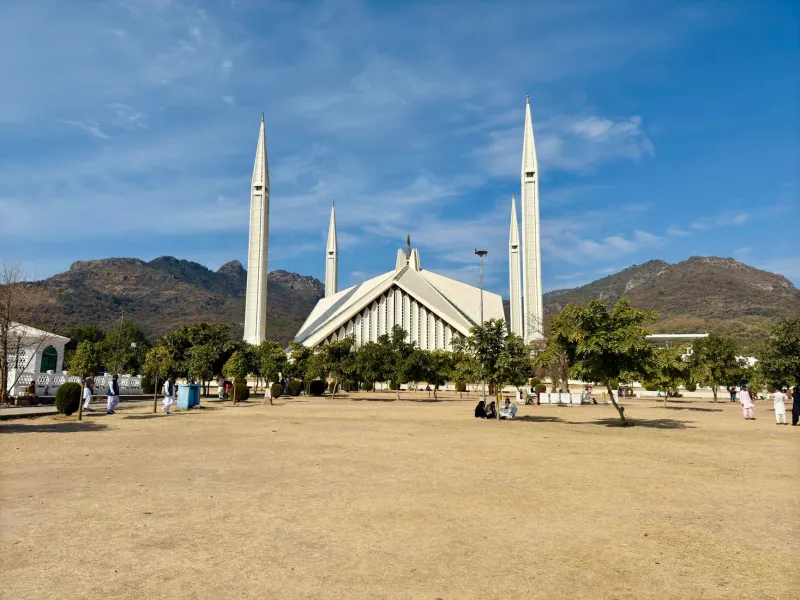
What changes on the ground is texture. Editors consistently report that seeing Islamabad's models in their actual environment — against the city's architecture, in natural light, in the context of a fashion culture that has its own internal logic — produces a different understanding than any digital portfolio can communicate. The city itself becomes part of the editorial conversation.
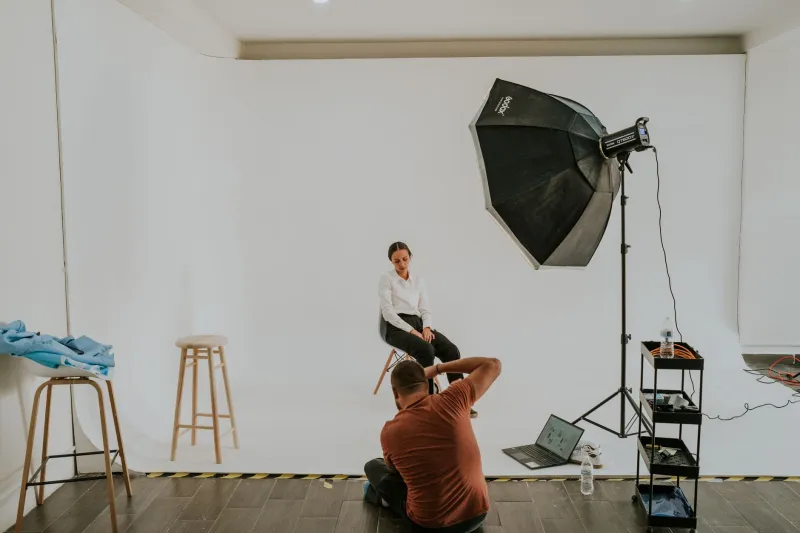
Shoots arranged during scouting visits have, in several documented cases, produced images that editors brought back to their publications not as scouting material but as finished editorial content. Islamabad's visual environment is that compelling.
How the City's Models Are Engineering Their Own Visibility
None of this has happened accidentally. The models who are appearing on editors' curated shortlists have made deliberate choices about how to present themselves to an international audience.
The most effective approach has been specificity over generality. Rather than positioning themselves as broadly adaptable — a strategy that works in oversaturated markets — Islamabad's models have leaned into what makes them distinct. That means articulating a clear aesthetic identity, understanding which American brands and publications align with that identity, and creating digital presences that communicate the full picture without requiring an in-person visit to grasp the potential.
Some have invested in relationships with photographers whose work travels well internationally, understanding that the quality and context of portfolio imagery determines whether an editor pauses or scrolls past. Others have cultivated professional networks that include stylists, art directors, and other collaborators whose own reputations lend credibility to the work.
The result is a cohort of models who are not waiting to be discovered in the traditional sense. They are making themselves findable, legible, and compelling to the specific decision-makers who have the power to move their careers forward.
The Role of Timing and Market Appetite
It would be incomplete to discuss Islamabad's rising profile on the American scouting calendar without acknowledging the broader moment the fashion industry is navigating. The appetite for faces and aesthetics that fall outside the historically dominant visual vocabulary of American fashion is not a passing trend — it reflects a genuine and structural shift in who the industry's audience is and what that audience expects to see.
Islamabad is well-positioned to meet that appetite because its talent pool is large, its fashion culture is mature, and its models are, as a group, professionally serious in ways that reduce the risk editors associate with sourcing talent from unfamiliar markets.
American publications that have featured Islamabad-sourced models have reported reader responses that validate the editorial instinct. The images land. They generate engagement. They expand the publication's perceived relevance in ways that are measurable.
That feedback loop is accelerating the calendar shift. Editors who made one trip are planning return visits. Those who heard about colleagues' experiences are booking their own.
What Comes Next for Models Aiming to Be on Those Lists
For models in Islamabad who are not yet on an editor's radar, the question is how to close that gap. The answer, based on how the city's most visible talent has navigated this landscape, involves several interconnected moves.
First, portfolio quality is non-negotiable. American editors are reviewing a large volume of material quickly, and images that do not immediately communicate a clear and compelling identity will not hold attention long enough to prompt a meeting.
Second, understanding the specific editorial DNA of target publications matters more than general visibility. A model who can demonstrate genuine familiarity with a publication's visual language — who can speak to why their aesthetic fits that specific context — makes an editor's job easier and stands out from candidates who are simply presenting themselves as available.
Third, professional infrastructure signals readiness. Models who have representation, a coherent digital presence, and a track record of reliable collaboration are lower-risk propositions for editors operating under tight production timelines.
Islamabad's moment on the international fashion calendar is not a coincidence, and it is not a temporary curiosity. It is the product of real talent, deliberate positioning, and a market appetite that the city is uniquely equipped to satisfy. For the models who understand that dynamic, the path forward is clearer than it has ever been.