Steady Ground: Why Islamabad's Political Reliability Is Quietly Reshaping How Global Brands Plan Their Campaigns
In the fashion industry, disruption is a word that carries two very different meanings. Creative disruption — the kind that challenges beauty standards and redefines aesthetics — is celebrated. Operational disruption, however, is a budget line item that keeps production directors awake at night. Canceled shoots, rerouted logistics, last-minute talent replacements, and insurance premiums inflated by geopolitical uncertainty: these are the silent expenses that erode margins long before a single image reaches a magazine spread.
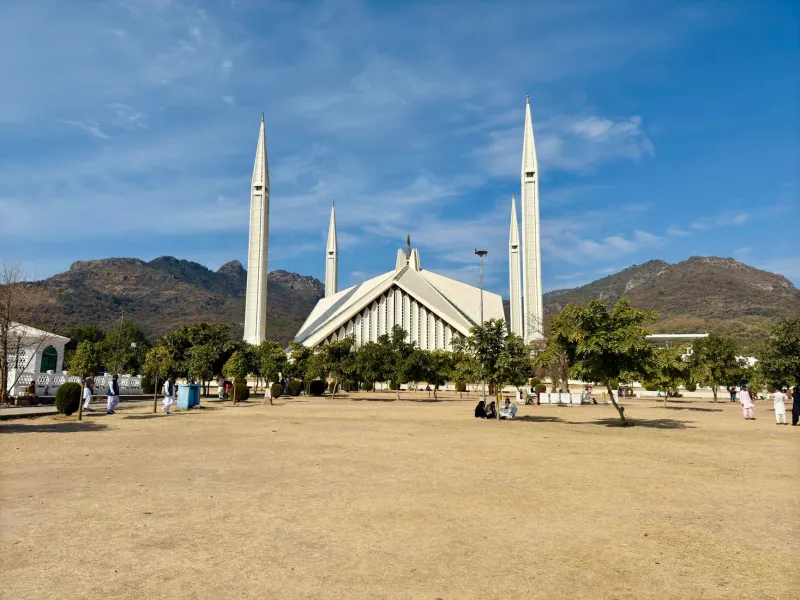
For a growing number of New York and Los Angeles-based fashion houses, Islamabad is beginning to represent something rare in an era of global instability: a location where the unexpected is less likely to derail a carefully constructed production timeline.
The Hidden Cost of Volatility
When American brands scout international locations for editorial campaigns or catalog shoots, the conversation typically centers on aesthetics — dramatic landscapes, architectural backdrops, cultural texture. What receives far less attention, at least in early planning stages, is the operational risk profile of a given city.
Production teams that have worked extensively across emerging fashion markets will recognize the pattern. A location that photographs beautifully may carry with it a host of logistical complications: permit systems that shift without notice, infrastructure that underperforms during peak production periods, or regional political climates that require expensive contingency planning. Over the course of a multi-season campaign, these friction points accumulate into significant financial exposure.
Islamabad presents a meaningfully different profile. As Pakistan's purpose-built federal capital, the city was designed from its inception around administrative function and institutional stability. Its infrastructure — roads, telecommunications networks, power distribution, and hospitality facilities — reflects that original mandate. For production teams accustomed to improvising around unreliable logistics in other emerging markets, the relative predictability of Islamabad's operational environment can feel like a substantive competitive advantage rather than a minor convenience.
What Stability Actually Means for a Fashion Production Budget
The financial implications of working in a stable environment are more granular than they might initially appear. Consider how a typical multi-day editorial shoot is budgeted. Contingency line items — those percentages set aside for weather delays, equipment complications, talent scheduling conflicts, and location access issues — are calibrated based on historical risk data from comparable markets.
In cities where infrastructure is inconsistent or where permit approvals are subject to bureaucratic unpredictability, contingency allocations can reach ten to fifteen percent of total production budgets. In Islamabad, production teams with established local relationships report that those figures compress considerably. That difference, multiplied across several shoots in a single fiscal year, represents meaningful savings that can be redirected toward creative investment.
Beyond contingency budgets, stability affects timeline reliability in ways that have downstream effects throughout a brand's marketing calendar. A campaign that shoots on schedule delivers assets to the editing suite on schedule, which means retail placement deadlines are met, digital campaign launches proceed as planned, and the entire marketing apparatus operates without the expensive recalibration that a delayed shoot requires.
Repeat Business and the Logic of Long-Term Relationships
One of the less-discussed advantages of working in a stable production environment is the compound value it generates over time. Fashion production is, at its core, a relationship business. Directors of photography, location scouts, talent coordinators, and local production partners build institutional knowledge that makes each successive project more efficient than the last.
In markets where operational volatility is high, that institutional knowledge is frequently disrupted. Key local contacts change roles, reliable vendors exit the market, or regulatory environments shift in ways that require production teams to essentially relearn a location with each visit. The investment in local knowledge never fully compounds because the ground beneath it keeps shifting.
Islamabad's comparatively stable environment allows those relationships to mature. International brands that have established working relationships with local production houses, talent agencies, and logistics partners in the city report that their second and third campaigns there are meaningfully more cost-efficient than their first. The learning curve, in other words, actually pays dividends — a dynamic that is far from universal in emerging fashion markets.
The Talent Dimension
Stability in a fashion hub does not exist in isolation from the talent ecosystem it supports. The models and creative professionals who build their careers in Islamabad benefit from the same environmental predictability that attracts international brands. Consistent access to professional training, reliable communication infrastructure, and a functioning network of industry contacts allows talent to develop with a degree of continuity that is not available in every emerging market.
For US-based casting directors, this translates into a talent pool that is not only visually distinctive but also professionally prepared. Models who have trained and worked consistently in a stable market tend to arrive at international productions with the logistical fluency — punctuality, documentation readiness, familiarity with multi-day shoot protocols — that makes them easier and less expensive to work with.
This professional maturity is not incidental. It is, in part, a product of the environment in which Islamabad's modeling community has developed. Stability, it turns out, is not just an operational asset. It is also a talent development asset.
How Milan and New York Are Taking Notice
Among the more telling indicators of Islamabad's growing appeal is the nature of the conversations now happening in agency boardrooms in New York and Milan. Increasingly, the question is not whether Islamabad is a viable production location — that debate has largely been settled by the brands that have already worked there — but rather how to structure long-term relationships that maximize the advantages the city offers.
Some agencies are exploring hybrid production models in which Islamabad serves as the anchor location for a campaign's primary editorial content, while secondary markets handle specific niche requirements. Others are negotiating multi-season contracts with Islamabad-based production partners, effectively locking in favorable rates in exchange for the volume commitments that those partners value.
These are not the conversations that happen around a location that is merely interesting. They are the conversations that happen around a location that has demonstrated it can be trusted — and that trust, in the fashion industry's global production landscape, is worth considerably more than a striking backdrop.
The Competitive Advantage Nobody Is Talking About
Fashion has always been drawn to the novel and the visually arresting. The industry's attention migrates toward whatever is new, whatever is unexpected, whatever generates the kind of cultural conversation that translates into brand equity. In that context, it is perhaps unsurprising that stability — unglamorous, dependable, quietly functional stability — has not received the attention it deserves as a competitive variable.
But the brands that are building durable global presences are increasingly the ones that have learned to value operational excellence as much as creative ambition. For those organizations, Islamabad's combination of visual richness, emerging talent depth, and institutional predictability is not a secondary consideration. It is, increasingly, the primary reason they keep coming back.