Passport Not Required: Why the World's Top Photography Crews Are Setting Up Shop in Islamabad
Photo: Sergio Miranda from Maia, Portugal, CC BY 2.0, via Wikimedia Commons
For decades, the geography of fashion photography was largely fixed. If a brand wanted prestige imagery, the shoot happened in New York, London, Milan, or perhaps a curated corner of Paris. Location scouts worked from the same rotating list of rooftops, cobblestone alleys, and minimalist studios. The visual vocabulary of high fashion had grown, if not stale, then at least predictable.
That calculus is changing — and Islamabad is at the center of the disruption.
Over the past several years, a growing number of international photography crews, art directors, and creative agencies have quietly shifted portions of their production pipelines to Pakistan's capital. What began as an experiment for a handful of forward-thinking teams has evolved into a recognizable trend, one that is reshaping where world-class fashion imagery gets made — and who gets to appear in it.
A City Built for the Frame
Islamabad was designed with intention. Planned and constructed in the 1960s as a deliberate act of nation-building, the city carries an architectural coherence that most capitals acquire only accidentally, if at all. Broad, tree-lined boulevards give way to Mughal-influenced government buildings. Contemporary glass towers stand in conversation with centuries-old mosques. The Margalla Hills form a dramatic natural backdrop that shifts from lush green to dusty amber depending on the season.
For photographers accustomed to fighting for usable light in Manhattan or navigating the bureaucratic maze of shooting permits in central London, Islamabad presents something almost disorienting in its generosity. Natural light here is abundant and varied. The city's relatively low density means that a crew can secure a genuinely clean architectural backdrop — free of intrusive signage, traffic congestion, and the visual noise that plagues shoots in more crowded metros — within minutes of the production base.
Art directors who have worked extensively in both Western markets and South Asia describe the city's visual range as genuinely exceptional. Within a single production day, a crew can move from the stark modernist geometry of the Faisal Mosque's exterior courtyard to the ornate carved stonework of the older residential quarters, to the raw, elemental drama of the Margalla Hills trailheads. That kind of tonal variety typically requires travel across multiple countries.
The Economics of Production Are Shifting
Visual appeal alone rarely drives industry-wide behavioral change. What is accelerating the Islamabad pivot among international production teams is a straightforward economic argument.
Production costs in Islamabad — encompassing crew accommodation, location fees, equipment logistics, and local talent — run substantially below comparable budgets in traditional fashion capitals. Industry professionals who have managed shoots in both markets estimate that a full production day in Islamabad can be completed for a fraction of what the same day would cost in New York or Milan, without meaningful compromise to the final image quality.
For independent photographers working with mid-sized brands that lack the budgets of luxury conglomerates, this differential is not a minor convenience — it is the difference between a campaign being financially viable and not. Several photographers working primarily with US-based contemporary fashion labels have described Islamabad as the location that made their most ambitious editorial work possible.
Beyond raw cost, the logistical environment has improved considerably. Islamabad's airport handles international connections with increasing frequency, and the city's hospitality infrastructure has expanded to accommodate the specific needs of visiting production crews. The practical friction of mounting a shoot here has diminished substantially.
Cultural Authenticity as a Creative Asset
There is a dimension to the Islamabad appeal that goes beyond architecture and accounting. International creative directors are increasingly vocal about the value of cultural specificity in fashion imagery — the quality of genuine place that distinguishes a photograph taken somewhere from one that merely uses a location as a neutral backdrop.
Islamabad offers that specificity in abundance. The city's cultural textures — the interplay of traditional craft traditions with contemporary urban life, the particular quality of its markets and communal spaces, the visual grammar of its religious architecture — provide a creative richness that cannot be simulated on a studio set in New Jersey or reproduced by dressing a London alley in imported textiles.
For brands whose messaging centers on authenticity, heritage, and cross-cultural dialogue, the difference between imagery produced in Islamabad and imagery produced elsewhere is legible to their audiences. The location does creative work that no amount of post-production can fully replicate.
Local Talent: The Unplanned Beneficiary
The surge in international production activity in Islamabad has produced an outcome that few industry observers fully anticipated: a meaningful expansion of professional opportunity for the city's own modeling talent.
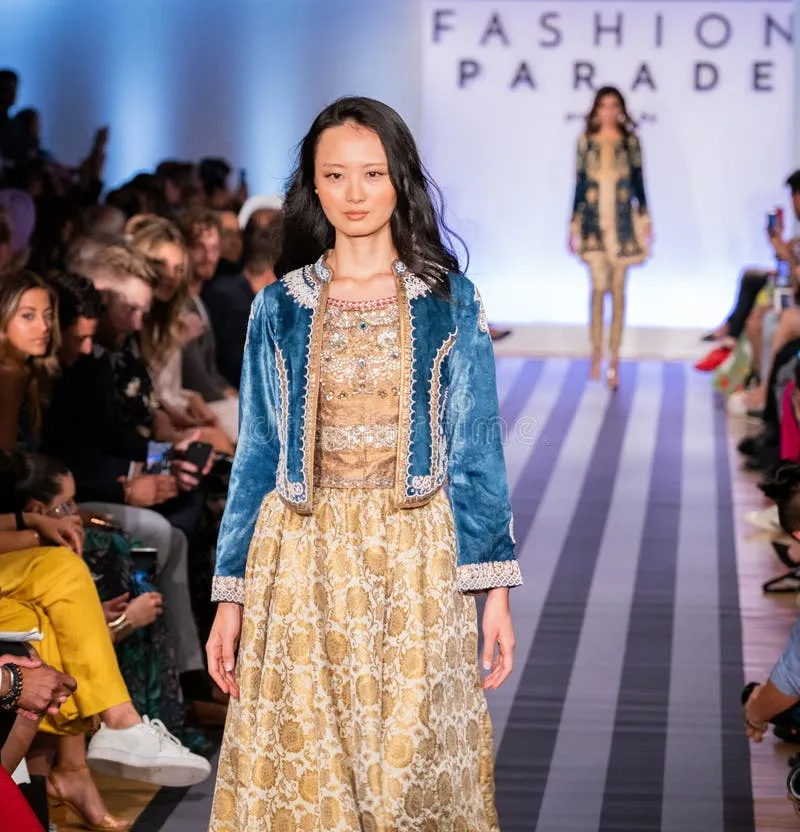
When international crews arrive, they frequently require local models — both for practical reasons related to permits and production efficiency, and increasingly because casting directors recognize that authentically South Asian faces serve the creative brief more effectively than imported talent. Models based in Islamabad are being cast in campaigns for US and European brands, shot by internationally recognized photographers, without ever boarding a plane.
This represents a structural departure from the traditional model, in which a Pakistani model seeking international exposure was expected to relocate — to Karachi, Dubai, London, or New York — before accessing that level of work. The work, in a growing number of cases, is now coming to them.
For the talent community at Models in Islamabad, this shift carries significant implications. The professional development calculus for an aspiring model in the capital has changed. Building a portfolio that meets international standards no longer requires an international journey. The infrastructure for world-class work is increasingly present on home ground.
What This Means for the Industry's Future
The photographers and art directors who have made the move to Islamabad are not treating it as a one-time experiment. Multiple teams have returned for successive productions, citing the combination of creative possibility and operational efficiency as genuinely difficult to replicate elsewhere.
As word circulates through the tight networks of international fashion production, more crews are expected to follow. Islamabad is developing a production reputation — the kind of organic, peer-driven recognition that transforms a city from an interesting option into an established destination.
For the models, photographers, stylists, and creative professionals who call the city home, that reputation is not an abstraction. It is the foundation of a local industry that is, with each international production that chooses Islamabad over a traditional alternative, becoming more visible, more connected, and more capable of competing on the world stage.