Why American Fashion Labels Are Scouting Islamabad Instead of New York
Photo: Los Angeles Times photographer, CC BY 4.0, via Wikimedia Commons
For decades, the geography of global fashion talent was considered settled. New York supplied the editorial edge. Los Angeles offered the commercial warmth. Milan and Paris held the couture prestige. And agencies in those cities served as the indisputable gatekeepers to international bookings. That arrangement, however comfortable it may have been for established players, is showing unmistakable signs of disruption — and Islamabad is emerging as one of the most consequential beneficiaries of that disruption.
Over the past several years, a quiet but accelerating pattern has taken shape: American fashion brands are bypassing traditional talent pipelines and turning their attention directly to Pakistan's capital. The reasons are neither accidental nor superficial. They reflect a deliberate recalibration of how brands think about visual storytelling, budget allocation, and audience resonance in an increasingly fragmented media landscape.
The Oversaturation Problem in Traditional Markets
New York's modeling market is, by any honest measure, overcrowded. The city produces extraordinary talent, but it also produces extraordinary competition — and for mid-tier American brands operating on realistic budgets, the math rarely works in their favor. Booking a recognizable face through a Manhattan agency involves agency commissions, usage fees, and day rates that can collectively price out brands that are not operating at the luxury tier.
Los Angeles presents a similar challenge, compounded by a cultural aesthetic that has become so thoroughly reproduced across social media that distinctiveness is increasingly difficult to achieve. When every campaign looks like a variation on the same sun-drenched, athleisure-adjacent visual grammar, brands begin to hunger for something genuinely different.
"We were spending a significant portion of our campaign budget just to look like everyone else," said one casting director who works with multiple American contemporary fashion labels and has conducted scouting trips to South Asia over the past two years. "At a certain point, you have to ask whether you're buying talent or just buying familiarity."
Islamabad, by contrast, offers neither the overcrowding nor the visual homogeneity. The city's modeling community is deep, disciplined, and largely unrepresented in Western markets — which means that American brands arriving there encounter faces that carry genuine novelty for US audiences.
The Economics of Going East
Cost efficiency is not the only driver of this trend, but it is an honest and significant one. Day rates for comparable talent in Islamabad can run substantially lower than equivalent bookings in New York, even after accounting for travel, logistics, and local production costs. For brands producing seasonal lookbooks, e-commerce content, or digital campaign assets — categories where volume matters and per-image costs are scrutinized — those savings are material.
Beyond day rates, the production infrastructure in Islamabad has matured considerably. Professional photographers, stylists, makeup artists, and location scouts who understand international brief standards are increasingly available, reducing the need for American brands to import their entire creative team. Several US-based creative directors who have worked in the city describe the local production ecosystem as "punching above its weight" relative to what they initially expected.
One brand executive at an American contemporary womenswear label described her company's first Islamabad production as a test that quickly became a template. "We went in expecting to manage around limitations," she explained. "What we found instead was a professional environment that was hungry, collaborative, and capable of delivering exactly what we needed — often faster than productions we'd run domestically."
Fresh Aesthetics in a Saturated Visual Economy
Beyond economics, there is a creative argument for Islamabad that may ultimately prove more durable. American consumers — particularly younger demographics who drive digital engagement — are demonstrably fatigued by the visual predictability of mainstream fashion content. Algorithms reward novelty, and novelty is increasingly scarce in markets that have been producing fashion imagery at industrial scale for generations.
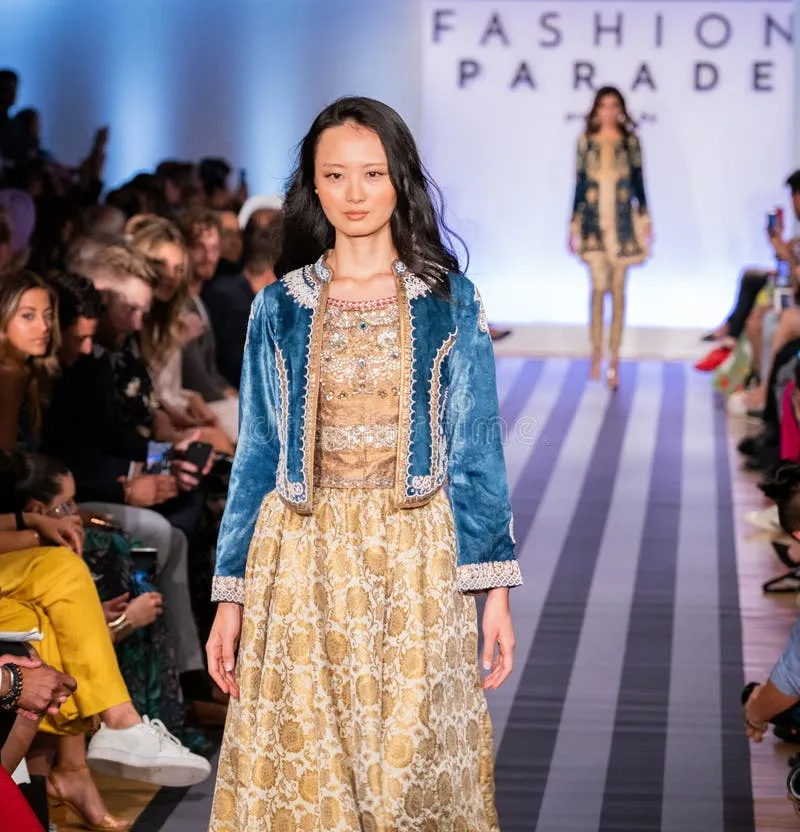
Islamabad's models bring a visual specificity that Western markets simply cannot replicate. Bone structure, coloring, bearing, and presence that are entirely authentic to the region carry an inherent freshness for audiences who have been saturated with a narrower range of looks. This is not a matter of tokenism or trend-chasing — it is a recognition that genuine visual diversity commands attention in ways that carefully curated diversity often does not.
"There is a difference between a brand that casts broadly to appear inclusive and a brand that genuinely discovers talent in a place where talent has not been commercially harvested," noted one New York-based stylist who has worked with South Asian models on American campaigns. "Audiences can feel that difference. It registers as authenticity rather than optics."
What This Means for Islamabad's Modeling Community
For models and aspiring talent based in Islamabad, the implications of this shift are both encouraging and instructive. The interest from American brands is real, but it is not unconditional. What US casting directors consistently report seeking is professionalism — punctuality, portfolio quality, range, and the ability to receive and execute creative direction — as much as they are seeking a specific look.
The models who are benefiting most from this moment are those who have invested in their craft with the same seriousness that their counterparts in New York or London bring to the work. That means formal portfolio development, training in posing and movement, an understanding of how to engage with different creative briefs, and the digital presence that allows international scouts to discover them without a physical introduction.
Models in Islamabad has documented this evolution closely, and the pattern is consistent: the talent that converts international interest into sustained bookings is the talent that treats modeling as a profession rather than an aspiration. The market is opening. The question for Islamabad's modeling community is whether it is prepared to meet that opening with the professionalism it demands.
The city is producing that talent. The infrastructure to support and develop it is growing. And the American brands that have already made the journey east are, by most accounts, planning to return.