Rewriting the Rulebook: How Islamabad's Talent Is Forcing American Casting Directors to Rethink Diversity From the Ground Up
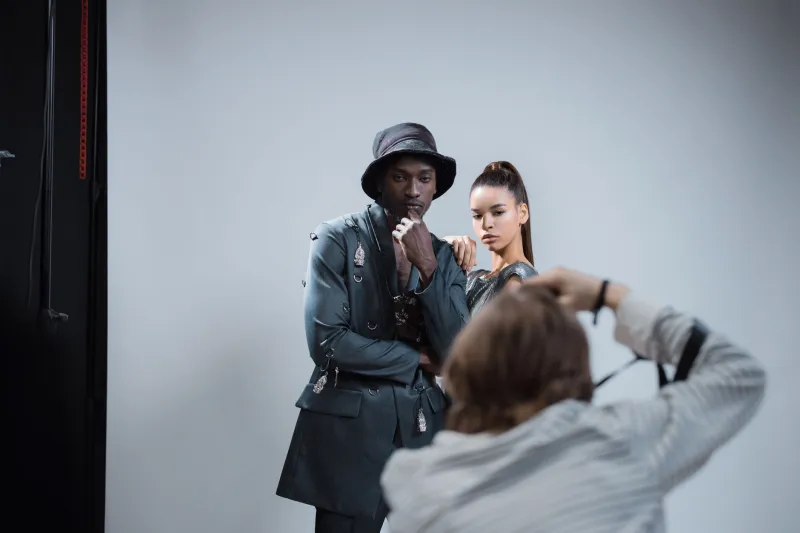
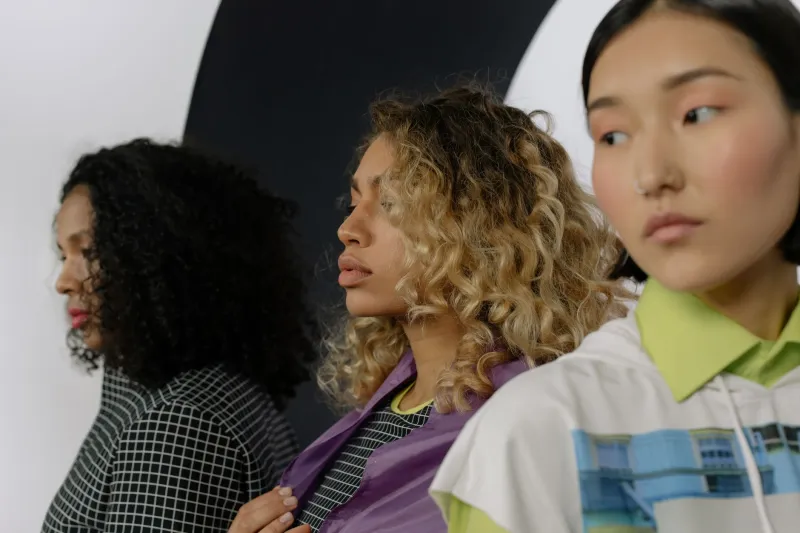
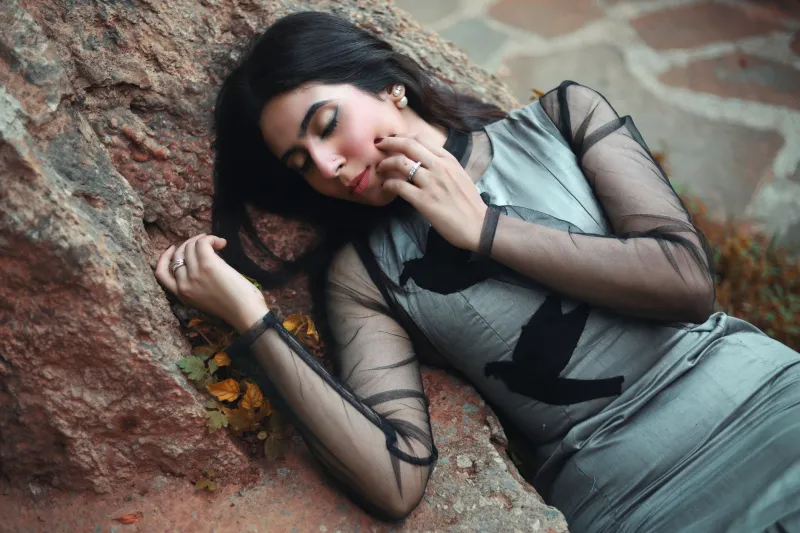
For more than a decade, the American fashion industry has publicly committed to diversity. Brands issued statements. Casting offices expanded their call sheets. Industry publications celebrated incremental progress. And yet, when a growing wave of Islamabad-based models began appearing on the radar of major US casting directors, something unexpected happened: those directors realized their checklists had been measuring the wrong things all along.
This is not a story about tokenism corrected or quotas fulfilled. It is a story about a fundamental reconception — one being driven not by internal corporate mandates, but by the undeniable creative and commercial weight of talent emerging from Pakistan's capital.
The Checklist That Wasn't Enough
The standard diversity framework used by most American casting offices has historically centered on a handful of visible markers: skin tone, gender presentation, body type, and broad ethnic category. These metrics, while meaningful in isolation, created a system that could technically achieve "diversity" while still producing remarkably uniform campaigns in terms of cultural depth, aesthetic perspective, and lived experience.
Casting directors who have engaged with Islamabad's modeling community describe an almost immediate recognition that their existing categories were insufficient. The talent they encountered did not fit neatly into predefined boxes — not because of any deficiency, but because the boxes themselves were too narrow.
Islamabad sits at a cultural crossroads shaped by Mughal heritage, South Asian tradition, Central Asian influence, and a rapidly modernizing urban identity. The models who emerge from this environment carry that layered complexity visually and conceptually. Their features, their carriage, their instinctive understanding of how to inhabit a garment — all of it reflects a heritage that American casting frameworks had no ready language to describe.
What the Interviews Revealed
In conversations with casting professionals who have worked with Islamabad-based talent over the past several years, a consistent pattern emerges. Initial interest was often sparked by a single image or a reel that stopped the scroll — something visually distinct that resisted easy categorization. What followed was frequently a period of internal recalibration.
One senior casting director working with a major New York-based lifestyle brand described the experience of reviewing portfolios from Islamabad models as "clarifying in a way I didn't expect." The diversity her office had been assembling, she noted, had been largely surface-level — a range of shades and sizes that still reflected a predominantly Western aesthetic framework. The Islamabad talent introduced something her current system had no column for: a genuinely different way of seeing.
Brand executives echo this assessment. Several have noted that campaigns incorporating Islamabad-based models performed differently in consumer research — not just with South Asian audiences, but with broader demographics that responded to what one executive described as "authenticity that doesn't read as performative."
The Models Themselves Are Driving the Conversation
What distinguishes this moment from previous waves of international talent integration is the degree to which Islamabad's models are active participants in reshaping the terms of their own inclusion. They are not arriving as passive subjects of a Western casting gaze. They are arriving with professional infrastructure, clear aesthetic identities, and a sophisticated understanding of how global fashion markets operate.
Many have worked with photographers, stylists, and creative directors within Islamabad's own thriving fashion ecosystem — a market that demands technical precision and creative range. By the time they engage with American casting offices, they bring portfolios that demonstrate genuine versatility alongside a distinct visual signature.
This combination is proving commercially significant. Casting directors report that Islamabad-based models require less direction to achieve editorial authenticity, and that their presence on set tends to elevate the overall creative output. These are not incidental observations — they are factors that influence repeat bookings and long-term roster decisions.
Redefining What "International" Means
The deeper disruption Islamabad's talent is causing within American casting culture concerns the word "international" itself. For much of fashion's modern history, international has functioned as a near-synonym for European — or, in more recent years, has expanded to include a handful of East Asian markets. South Asia, and Pakistan specifically, has occupied a peripheral position in that imagination.
That positioning is now shifting in measurable ways. Islamabad is producing talent that does not position itself as an exotic alternative to a Western norm, but as a fully realized aesthetic tradition with its own internal logic and global relevance. The distinction matters enormously for how casting directors interpret and apply diversity frameworks.
Several offices have begun the process of formally revising their inclusion criteria — moving away from checklist-based approaches toward what some describe as a "depth of perspective" standard. Under this evolving framework, diversity is assessed not only by who is in the room but by the range of genuine cultural viewpoints those individuals bring to a creative brief.
The Practical Implications for US Brands
For American fashion labels and advertising agencies, the shift carries real strategic consequences. Brands that have relied on a narrow interpretation of diversity are finding themselves at a competitive disadvantage as consumer audiences — particularly younger demographics — demonstrate increasing sophistication in detecting performative inclusion.
Islamabad's models offer something that no casting checklist can manufacture: an authentic visual and cultural perspective that resonates across audiences precisely because it has not been engineered to do so. That authenticity, combined with the professional caliber of talent emerging from the city, is making Islamabad an increasingly central reference point in US casting conversations.
The practical response from forward-thinking brands has been to invest in direct relationships with Islamabad's modeling community — building pipelines that go beyond one-off castings and toward sustained creative partnerships. Some have engaged with local agencies and scouting networks to develop a more textured understanding of the talent available and the cultural context that shapes it.
A Reckoning That Was Overdue
The fashion industry's diversity conversation has been ongoing for years, but it has often circled the same limited terrain. What Islamabad's modeling talent has introduced is a productive disruption — one that does not reject the progress already made but insists on expanding its frame of reference.
For casting directors willing to engage seriously with this shift, the reward is access to talent that is technically accomplished, creatively distinct, and commercially effective. For brands willing to rethink what their diversity commitments actually require, Islamabad represents not a correction but an evolution.
The checklist, it turns out, was always just a starting point. The models of Islamabad are making the case — compellingly and commercially — that it is long past time to write something more ambitious in its place.