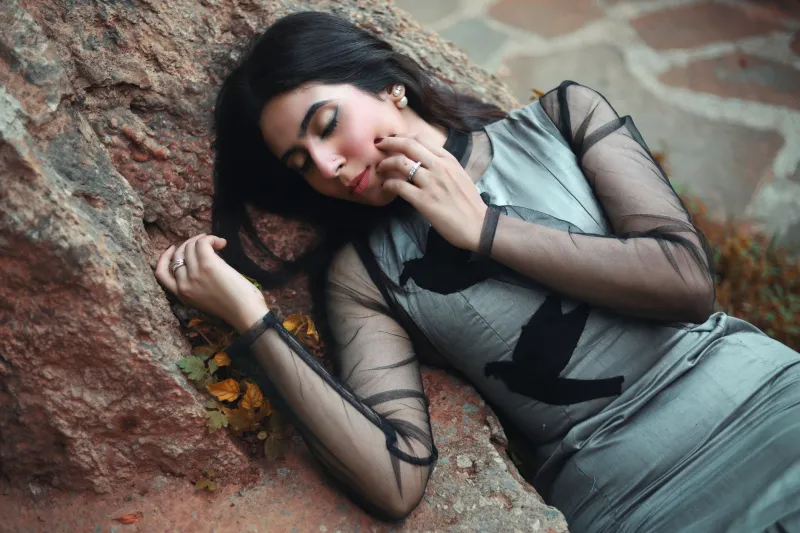
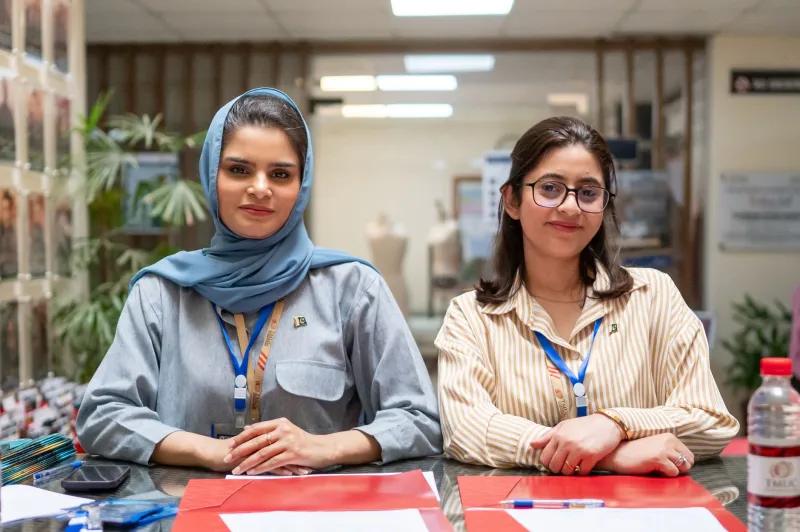
Unintentional Influence: How Islamabad's Model Economy Is Quietly Redefining What Beauty Looks Like on a Global Scale
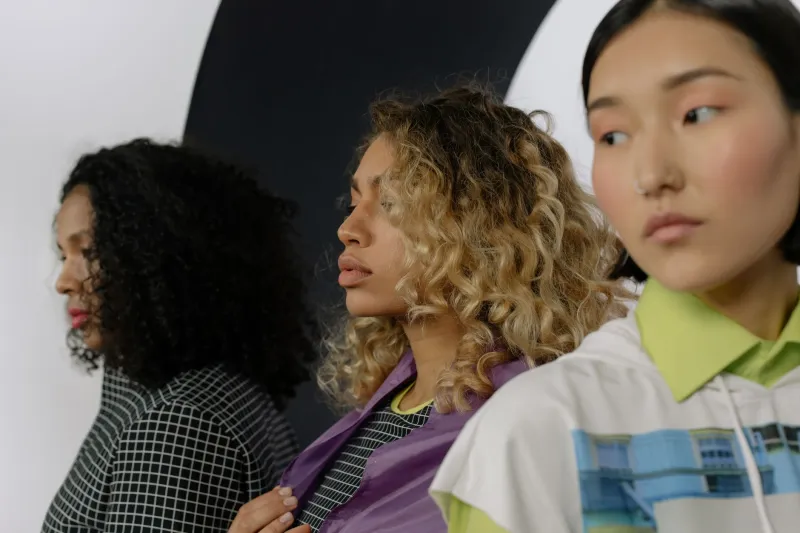
There is a particular irony embedded in the story of how Islamabad entered the global beauty conversation. The city's models did not arrive with manifestos or marketing campaigns. They did not stage runway protests or publish open letters demanding inclusion. They simply worked — consistently, professionally, and with a visual specificity that Western markets had never quite encountered before. The result has been something far more consequential than a trend: a gradual, largely unplanned recalibration of what the industry considers beautiful, marketable, and aspirationally relevant.
For American fashion editors, casting directors, and brand strategists who have spent the past several years reckoning with authenticity gaps in their campaigns, Islamabad's emergence has functioned less like a disruption and more like a correction. Something that was missing has been supplied. The industry is now deciding what to do with that fact.
The Casting Room Has Changed Its Vocabulary
Speak with any mid-to-senior level casting director currently working with major US fashion houses, and a pattern emerges quickly. The language they use to describe what they want has shifted. Phrases like "globally relatable" and "culturally textured" have entered briefs where "exotic" — a word the industry has spent years trying to retire — once dominated. Islamabad's talent pool sits at the center of that linguistic evolution.
The shift is not simply cosmetic. Casting decisions downstream affect everything: which skin tones are tested in product development, which facial structures inform the proportional assumptions built into digital filters, which hair textures receive investment from beauty brands developing new lines. When a model from Islamabad books a major campaign, the ripple effect extends well beyond the photograph itself.
Several US-based beauty conglomerates have acknowledged, in investor communications and product launch materials, that their shade-range expansions and foundation undertone recalibrations were directly informed by campaign data — data that included, in multiple documented cases, talent sourced from Islamabad. The city's models did not lobby for this outcome. They appeared in the work, and the work did its job.
Editorial Desks Are Asking Different Questions
At the level of major American fashion publications, the Islamabad effect has manifested most visibly in editorial meetings rather than on newsstands. Editors who once operated with a relatively fixed conception of which faces could carry a cover — a conception shaped by decades of market research, advertiser preferences, and institutional inertia — are now fielding questions from their own teams that would have been unusual five years ago.
Why does our beauty coverage look the way it does? Who decided that these were the default parameters? What are we missing by not reflecting the full range of faces that our readers actually inhabit?
Islamabad's models have not answered these questions. But their increasing visibility in international work has made the questions harder to avoid. There is something clarifying about seeing a specific face in a specific context and recognizing, viscerally, that the absence of that face in other contexts was a choice — not an inevitability.
Several fashion editors based in New York have described a version of this experience when discussing their first exposure to campaigns shot in Islamabad. The recognition arrives not as a political statement but as an aesthetic one: this is compelling, this is contemporary, and we have been missing it.
The Sustainability Question the Industry Cannot Ignore
Fashion has a well-documented relationship with novelty. It discovers, celebrates, exhausts, and discards. The industry's history is populated with moments of apparent breakthrough — the embrace of a previously marginalized community, the elevation of a previously overlooked geography — that ultimately resolved into a brief chapter rather than a lasting structural change.
The legitimate question, then, is whether Islamabad's current influence on global beauty standards represents something durable or whether it is operating within the same novelty cycle that has absorbed and diluted so many similar moments.
The evidence, at present, suggests reasons for cautious optimism — though not complacency. The factors driving Western interest in Islamabad's talent are not purely aesthetic. They are economic, logistical, and increasingly, reputational. Brands that have invested in authentic representation are finding that their audiences notice, and respond, in measurable commercial terms. That creates a financial incentive for sustainability that pure trend cycles rarely generate.
Furthermore, the infrastructure surrounding Islamabad's modeling community has matured considerably. Talent platforms, agency relationships, and professional development resources have created a pipeline that is not dependent on a single moment of discovery. The supply, in other words, is not a novelty act. It is a functioning industry with depth and continuity.
What Happens When the Conversation Becomes Institutional
Perhaps the most significant indicator of whether Islamabad's influence will endure is the degree to which it has begun to shape institutional processes rather than individual decisions. Individual decisions — a casting director choosing a particular model for a particular campaign — are reversible. Institutional processes — a brand revising its internal brief templates, a publication restructuring its beauty coverage framework, a product developer adjusting the parameters of a new line — are considerably harder to undo.
By that measure, the Islamabad effect is already operating at a level of depth that suggests it is not simply a passing enthusiasm. The decisions being made in response to this talent pool are increasingly embedded in workflows, budgets, and strategic plans that extend multiple years forward.
This does not mean the work is finished. Representation that exists only at the campaign level — visible in advertising but absent from creative leadership, absent from the decision-making rooms where briefs are written and standards are set — is representation in a limited sense. The fuller version of this shift requires Islamabad's models and fashion professionals to move not just through the frame but into the rooms where the frame is constructed.
A City That Was Not Trying to Change Anything
What makes Islamabad's story distinct from other moments of fashion-world discovery is the absence of self-conscious positioning at its origin. The city's modeling community built itself around professionalism, specificity, and craft. It was not performing diversity for a Western audience. It was simply producing exceptional work in a context that happened to be underrepresented in global markets.
That authenticity — the fact that what Western brands encountered in Islamabad was not a product engineered for their consumption but a genuine creative and professional culture with its own internal logic — is precisely what has made the encounter so resonant. And it is, arguably, what gives the current moment its best chance of becoming something more than a trend.
The beauty industry changes slowly, and rarely in straight lines. But when it changes in response to something real, the change tends to hold. Islamabad gave the global fashion market something real. What the market does with that gift will define the next chapter of this story — for both sides.