Calendar Disruption: How Islamabad's Shooting Windows Are Forcing American Fashion Houses to Rebuild Their Annual Timelines
For the better part of five decades, the American fashion calendar operated on a rhythm as predictable as a metronome. Spring campaigns shot in November. Fall collections locked in by March. The machinery of casting, location scouting, and talent contracting moved in lockstep with a schedule that had been refined, inherited, and rarely questioned. That rhythm is now being interrupted — not by a trend report or a board-level mandate, but by a city most brand strategists had never placed on a production map until recently.
Islamabad is rewriting the timeline. And the brands paying attention are finding that the rewrite is worth every logistical adjustment it demands.
The Seasonal Argument That's Winning Over Brand Strategists
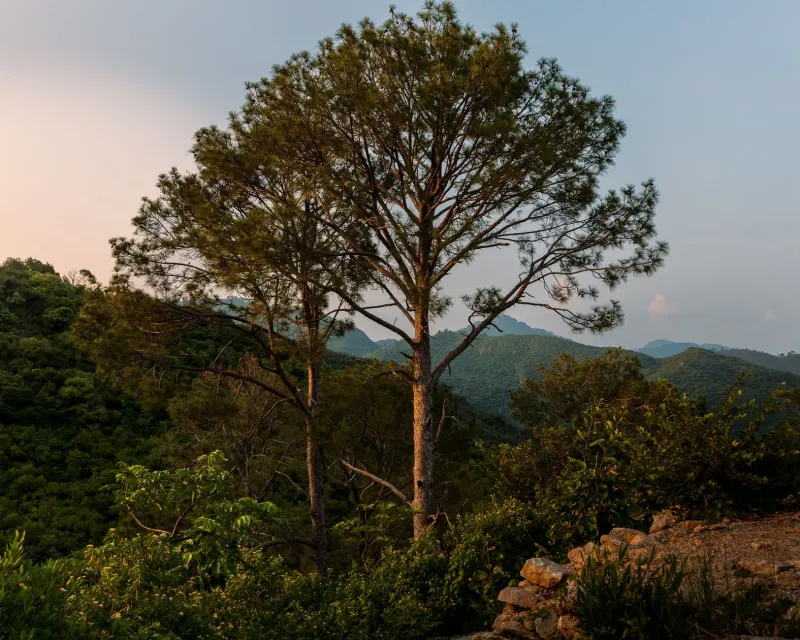
Anyone who has spent time in Islamabad understands that the city operates in distinct visual chapters. The Margalla Hills shift in color and texture with each passing month. Morning mist settles differently in February than it does in October. The quality of natural light — diffused, warm, and remarkably consistent during specific windows — is something cinematographers and fashion photographers have described as almost impossible to manufacture artificially.
It is precisely this specificity that has begun attracting the attention of American brand strategists who are tired of fighting against the limitations of their traditional shooting environments. Studios in New York and Los Angeles offer control but sacrifice spontaneity. European locations offer heritage but carry premium costs and logistical complexity. Islamabad, by contrast, offers something increasingly rare in global fashion production: a location where the environment actively collaborates with the creative vision.
Brandon Elias, a brand strategist who has consulted for multiple mid-to-large American fashion labels over the past decade, describes the shift in frank terms. "We spent years trying to recreate a certain quality of light and landscape in locations we were already comfortable with. The honest conversation happening in boardrooms right now is that we've been engineering solutions to a problem Islamabad simply doesn't have."
The Windows That Matter Most
Within the Islamabad production community, two primary shooting windows have emerged as the most sought-after by international teams. The first runs from late February through early April, when winter recedes and the landscape enters a transitional phase characterized by lush greenery, mild temperatures, and a softness in the atmosphere that photographers describe as uniquely flattering for fashion imagery. The second window, spanning mid-September through early November, delivers a cooler palette — deeper greens, longer shadows, and a crispness in the air that translates beautifully into editorial work for fall and winter collections.
For American fashion houses accustomed to planning twelve to eighteen months in advance, these windows have introduced a new variable into the scheduling equation. Campaigns that were previously assigned to generic shoot dates based on internal availability are now being anchored to Islamabad's seasonal calendar first, with everything else built around those fixed points.
Casting director Miriam Voss, who has worked with several American labels transitioning their scouting operations eastward, explains the practical implications. "We used to build the talent search around when the creative director was available, when the photographer was free, when the studio was booked. Now we start with: when is the Islamabad window open? Everything else negotiates around that answer."
Talent as a Seasonal Asset
The restructuring of the production calendar has had a direct and meaningful impact on how American brands approach talent acquisition in Islamabad. Models and fashion professionals in the city are no longer being considered for one-off castings; they are being evaluated as seasonal assets — professionals whose availability, local knowledge, and on-location expertise are factored into campaign planning months before a single contract is signed.
This represents a significant elevation in how Islamabad's modeling community is perceived by international clients. Rather than being sourced reactively — discovered during a scout, contracted quickly, and released after a single shoot — talent from the city is now being identified during one window and retained for the next, with long-term relationships forming between American creative teams and the models and stylists they've come to trust.
For professionals represented through platforms like Models in Islamabad, this shift carries tangible career implications. The models who are building sustained relationships with international brands are those who have invested in understanding the production process from the brand's perspective — who know what a campaign timeline looks like, what a brand strategist needs to hear, and how to position themselves not merely as faces but as reliable, knowledgeable collaborators.
The Financial Logic Behind the Restructuring
Beyond the creative advantages, the financial case for reorganizing around Islamabad's calendar is becoming increasingly difficult to dismiss. Production costs in Islamabad — even when accounting for international travel, accommodation, and local coordination — consistently undercut comparable shoots in Western markets. When those cost savings are layered on top of the creative advantages the city's seasonal windows provide, the return-on-investment calculation becomes straightforward.
American brands are also finding that the restructured timeline carries downstream financial benefits. Campaigns shot during Islamabad's optimal windows tend to require fewer reshoots, less post-production correction, and shorter editing cycles — primarily because the natural conditions reduce the number of variables that need to be controlled or corrected after the fact. The efficiency gains are real, and they are beginning to show up in production budgets in ways that finance departments are noticing.
What the Shift Signals for the Industry
The reconfiguration of American fashion calendars around Islamabad's seasonal rhythm is not a temporary accommodation. The brands making these changes are not experimenting — they are restructuring. The distinction matters. Experimentation implies a willingness to revert. Restructuring implies a recognition that the old model was suboptimal, and that a better framework has been identified.
For the Islamabad fashion community, this is a moment of significant leverage. The city's seasonal advantages are not manufactured and cannot be easily replicated elsewhere. The talent pool developing within that environment carries a contextual fluency — an understanding of how to work within those conditions, how to move through the landscape, how to collaborate with international teams — that represents genuine professional value.
The American fashion industry is not simply discovering Islamabad as a location. It is discovering Islamabad as a structural solution to problems that have accumulated quietly over decades of operating within a calendar that was never designed with global creative ambition in mind. The brands reorganizing their timelines are doing so because the evidence, both creative and financial, has become too compelling to schedule around any longer.