Beyond the Mold: How Islamabad's Models Are Forcing a Global Reckoning With What 'International' Actually Looks Like

For as long as most casting directors can remember, the phrase "international look" functioned less as a description and more as a gatekeeping mechanism. It signaled a particular set of features — a specific bone structure, a familiar skin tone, a silhouette that had been refined through decades of European runway culture — and it quietly excluded everything that fell outside those parameters. The phrase was never formally defined, which made it all the more powerful. It simply was what it was, and the industry moved accordingly.
That consensus is fracturing. And a significant share of the pressure forcing that fracture is coming from Islamabad.
A Phrase That Outlived Its Usefulness
The concept of the "international look" emerged in an era when global fashion communication was slow, expensive, and largely controlled by a handful of editorial gatekeepers based in New York, Paris, Milan, and London. What those gatekeepers deemed universal became, by default, what the industry treated as universal. The system was self-reinforcing, and for decades it worked — at least for those it was designed to serve.
Digital media dismantled the gatekeeping apparatus faster than the industry expected. Suddenly, a campaign photographed in Islamabad could reach a consumer in Chicago, São Paulo, and Seoul within the same news cycle. The geographic and cultural assumptions embedded in the old definition of "international" began to look less like objective standards and more like provincial preferences dressed up in authoritative language.
US-based casting director Miriam Calloway, who has worked with major American ready-to-wear labels for nearly fifteen years, describes the shift with characteristic directness. "We were using 'international' to mean something very specific, and we were pretending it meant something universal. When you start actually working across markets — real markets, not theoretical ones — you realize pretty quickly that the face you thought would travel everywhere is actually a very local idea."
What Islamabad Brings to the Table
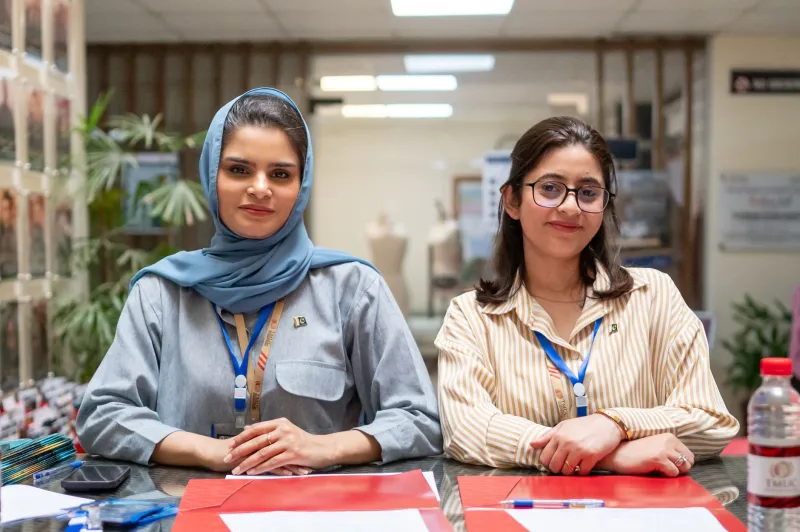
The models emerging from Pakistan's capital are not attempting to approximate or soften their distinctiveness for Western audiences. That, according to many of the photographers and creative directors who have worked with them, is precisely what makes them so effective on camera.
Islamabad's talent pool reflects a specific convergence of South Asian features, Central Asian influence, and the particular bearing that comes from growing up in a city defined by formal architecture, diplomatic culture, and a strong tradition of public presentation. The result is a visual profile that reads as simultaneously unfamiliar and deeply authoritative — a combination that camera lenses respond to in ways that are difficult to manufacture.
New York-based editorial photographer James Okafor, who spent three weeks shooting in Islamabad last spring, describes the experience of working with local models as recalibrating. "There's a quality of presence that I kept encountering — this combination of stillness and intensity — that I genuinely had not seen concentrated in one place before. It's not a trick of lighting. It's structural. It's in the faces, the posture, the way they occupy a frame."
For fashion brands trying to communicate credibility, heritage, and global relevance simultaneously, that quality is not a minor asset. It is increasingly a strategic one.
The Casting Director's Recalculation
The shift in how American casting directors are approaching Pakistani talent is not merely aesthetic. It reflects a broader commercial recalculation driven by changing consumer demographics and the accelerating growth of South Asian purchasing power in the United States.
The South Asian American population now represents one of the fastest-growing and highest-earning demographic segments in the country. Fashion brands that once treated representation as a secondary concern — something to be addressed after the primary creative decisions were made — are finding that the calculus has reversed. Representation has become a primary commercial consideration, and authenticity within that representation has become a differentiating factor.
This is where Islamabad's models occupy particularly valuable ground. A brand that casts a Pakistani model who has been coached to approximate a Western aesthetic sends a different signal than one that casts a model whose distinctly Pakistani features are presented without apology or modification. Consumers — particularly younger ones — have grown sophisticated at reading that difference, and they respond accordingly.
Calloway notes that several of her clients have moved away from the softened, hybridized approach they once defaulted to. "The feedback we kept getting was that audiences could tell when something was being diluted for them. They didn't want the diluted version. They wanted the real thing, presented with confidence."
Models Who Understand Their Own Value
What distinguishes the current generation of Islamabad's working models is not only their appearance but their articulateness about what they represent. Many of them have developed sophisticated frameworks for understanding their own market value — frameworks that allow them to negotiate from a position of genuine knowledge rather than deference.
This self-awareness shapes everything from the contracts they accept to the creative direction they engage with. Models who understand that their specific features constitute a premium offering — rather than an exotic variation on a standard template — approach the industry differently. They ask different questions, push back on different assumptions, and build careers with a different kind of structural integrity.
For Western brands accustomed to working with talent that has been trained to accommodate editorial direction without friction, this can require adjustment. But the creative directors who have made that adjustment tend to describe the results as substantially better work.
"When you're collaborating with someone who has a clear sense of what they bring and why it matters, the whole process becomes more generative," says Los Angeles-based creative director Priya Nair, who has cast Pakistani models in several high-profile campaigns over the past two years. "You're not just directing a body through a concept. You're working with someone who has a perspective. That shows up in the final image."
Rewriting the Definition in Real Time
The most significant consequence of Islamabad's growing influence on global casting may be the permanent expansion of what the industry means when it reaches for the phrase "international look." The old definition is not simply being replaced — it is being revealed as the narrow construct it always was, and a more accurate, more inclusive understanding is being built in its place.
For US fashion brands navigating an increasingly complex consumer landscape, that expansion represents opportunity. The face that travels — the look that resonates across markets, communicates quality, and carries genuine authority — is no longer constrained by the assumptions of a previous generation of gatekeepers.
Islamabad's models are not asking for a seat at a table that was built without them. They are demonstrating, campaign by campaign and casting by casting, that the table itself needs to be rebuilt. The global fashion industry, to its credit, is beginning to pick up the tools.